
Call us now :08045800815
 Send Inquiry
 Send Inquiry
Formic acid
Formic acid Specification
- Ph Level
- 2.1 (0.1 M solution)
- Solubility
- Highly soluble in water
- Storage Instructions
- Store in a cool dry place away from incompatible materials
- Density
- 1.22 Gram per cubic centimeter(g/cm3)
- Odour
- Pungent acrid
- Molecular Weight
- 46.03 g/mol
- Appearance
- Colorless liquid
- Chemical Name
- Formic Acid
- Other Names
- Methanoic acid
- Classification
- Corrosive Toxic
- CAS No
- 64-18-6
- Type
- Organic acid
- Application
- Used in leather tanning dyeing and as a preservative
- Application Method
- Industrial scale application or laboratory use
- Raw Material
- Methanol Carbon Monoxide
- Physical State
- Liquid
- Usage
- Used as a reducing agent preservative and in industrial applications
- Shelf Life
- 1 year under proper storage conditions
- Best Before
- Not clearly stated in the image
About Formic acid
Formic acid is abundant in nature and has been used for many years as an environmentally friendly alternative in industries such as textiles, natural rubber and leather processing. It is also used in agriculture, as well as in the production of medicines, cosmetics, detergents and disinfectants. It has excellent properties in controlling acidity, while at the same time effectively restricting microbial growth.
Formic acid is the strongest of the simple, unsaturated carboxylic acids. Furthermore, unlike other organic acids, formic acid has the advantage of being both a carboxylic acid and an aldehyde. It acts, therefore, both as an acidifying and a reducing agent, which clearly gives formic acid enhanced potential for use in industry.
FAQs of Formic acid:
Q: What is the appearance of Formic Acid?
A: Formic Acid is a colorless liquid.Q: What are the applications of Formic Acid?
A: Formic Acid is used in leather tanning, dyeing, and as a preservative. It is also utilized as a reducing agent and in various industrial applications.Q: What is the storage instruction for Formic Acid?
A: Formic Acid should be stored in a cool, dry place away from incompatible materials.Q: What is the shelf life of Formic Acid under proper storage conditions?
A: The shelf life of Formic Acid is 1 year when stored properly.Q: What is the classification of Formic Acid?
A: Formic Acid is classified as corrosive and toxic.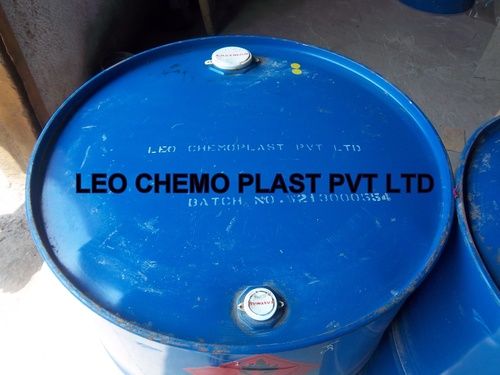
Tell us about your requirement

Price:
Quantity
Select Unit
- 50
- 100
- 200
- 250
- 500
- 1000+
Additional detail
Mobile number
Email

More Products in Organic Solvents Category
Toluene diisocyanate
Appearance : Clear to pale yellow liquid
Application : Production of polyurethanes, flexible foams, coatings, adhesives, sealants, and elastomers
Odour : Sharp, pungent
Molecular Weight : 174.15 g/mol
Classification : Other, Aromatic isocyanate; Organic compound
Type : Other , Industrial chemical
Resorcinol
Appearance : White to faint pink crystalline solid
Application : Adhesives, Pharmaceuticals, Hair Dyes, Rubber Industry, Chemical Intermediates
Odour : Slight phenolic odour
Molecular Weight : 110.11 g/mol
Classification : Other, Aromatic Diol, Phenolic Compound
Type : Other , Industrial Grade, Laboratory Grade

Tri-n-Butylamine (TNBA)
Appearance : Not available from the provided image
Application : Not available from the provided image
Odour : Not available from the provided image
Molecular Weight : Not available from the provided image
Classification : Other, Not available from the provided image
Type : Other , Not available from the provided image
Cyclohexylamine
Appearance : Clear, colorless to pale yellow liquid
Application : Corrosion inhibitor, Rubber accelerator, Water treatment chemical, Intermediate for synthesis
Odour : Fishy, ammoniacal
Molecular Weight : 99.17 g/mol
Classification : Other, Aliphatic amine
Type : Other , Industrial Chemical


 Send Inquiry
Our Products

B/126, Ghatkopar Industrial Estate, Behind R-City Mall, Off. L.B.S. Marg, Ghatkopar (W),Mumbai - 400086, Maharashtra, India

Mr. Sudhir Mehta
(JMD)
Mobile :08045800815
Mr. Hitesh Mehta
(CMD)
 Send Inquiry
 Send SMS
Developed and Managed by Infocom Network Private Limited.
