
Call us now :08045800815
 Send Inquiry
 Send Inquiry
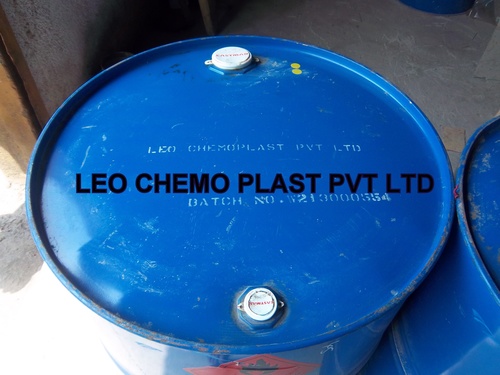
Morpholine
About Morpholine
Morpholine is an organic chemical compound having the chemical formula O(CH2CH2)2NH. This heterocycle features both amine and etherfunctional groups. Because of the amine, morpholine is a base; its conjugate acid is called morpholinium. For example, treating morpholine with hydrochloric acid makes the salt morpholinium chloride.
Industrial applications
Morpholine is a common additive, in parts per million concentrations, for pH adjustment in both fossil fuel and nuclear power plant steam systems. Morpholine is used because its volatility is about the same as water, so once it is added to the water, its concentration becomes distributed rather evenly in both the water and steam phases. Its pH-adjusting qualities then become distributed throughout the steam plant to provide corrosionprotection. Morpholine is often used in conjunction with low concentrations of hydrazine or ammonia to provide a comprehensive all-volatile treatment chemistry for corrosion protection for the steam systems of such plants. Morpholine decomposes reasonably slowly in the absence of oxygen at the high temperatures and pressures in these steam systems.
Organic synthesis
Morpholine undergoes most chemical reactions typical for other secondary amines, though the presence of the ether oxygen withdraws electron density from the nitrogen, rendering it less nucleophilic (and less basic) than structurally similar secondary amines such as piperidine. For this reason, it forms a stable chloramine (CAS#23328-69-0).[6]
It is commonly used to generate enamines.[7]
Morpholine is widely used in organic synthesis. For example, it is a building block in the preparation of the antibiotic linezolid, the anticancer agent gefitinib (Iressa) and the analgesic dextromoramide.
In research and in industry, the low cost and polarity of morpholine lead to its common use as a solvent for chemical reactions.
Agriculture
As a fruit coating
Morpholine is used as a chemical emulsifier in the process of waxing fruit. Naturally, fruits make waxes to protect against insects and fungal contamination, but this can be lost as the fruit is cleaned. A small amount of new wax is applied to replace it. Morpholine is used as an emulsifier and solubility aid for shellac, which is used as a wax for fruit coating.[8] The European Union has forbidden the use of morpholine in fruit coating.
As a component in fungicides
Morpholine derivatives used as agricultural fungicides in cereals are known as ergosterol biosynthes is inhibitors.
Industrial applications
Morpholine is a common additive, in parts per million concentrations, for pH adjustment in both fossil fuel and nuclear power plant steam systems. Morpholine is used because its volatility is about the same as water, so once it is added to the water, its concentration becomes distributed rather evenly in both the water and steam phases. Its pH-adjusting qualities then become distributed throughout the steam plant to provide corrosionprotection. Morpholine is often used in conjunction with low concentrations of hydrazine or ammonia to provide a comprehensive all-volatile treatment chemistry for corrosion protection for the steam systems of such plants. Morpholine decomposes reasonably slowly in the absence of oxygen at the high temperatures and pressures in these steam systems.
Organic synthesis
Morpholine undergoes most chemical reactions typical for other secondary amines, though the presence of the ether oxygen withdraws electron density from the nitrogen, rendering it less nucleophilic (and less basic) than structurally similar secondary amines such as piperidine. For this reason, it forms a stable chloramine (CAS#23328-69-0).[6]
It is commonly used to generate enamines.[7]
Morpholine is widely used in organic synthesis. For example, it is a building block in the preparation of the antibiotic linezolid, the anticancer agent gefitinib (Iressa) and the analgesic dextromoramide.
In research and in industry, the low cost and polarity of morpholine lead to its common use as a solvent for chemical reactions.
Agriculture
As a fruit coating
Morpholine is used as a chemical emulsifier in the process of waxing fruit. Naturally, fruits make waxes to protect against insects and fungal contamination, but this can be lost as the fruit is cleaned. A small amount of new wax is applied to replace it. Morpholine is used as an emulsifier and solubility aid for shellac, which is used as a wax for fruit coating.[8] The European Union has forbidden the use of morpholine in fruit coating.
As a component in fungicides
Morpholine derivatives used as agricultural fungicides in cereals are known as ergosterol biosynthes is inhibitors.
- Amorolfine
- Fenpropimorph
- Tridemorph
Tell us about your requirement

Price:
Quantity
Select Unit
- 50
- 100
- 200
- 250
- 500
- 1000+
Additional detail
Mobile number
Email

More Products in Organic Solvents Category
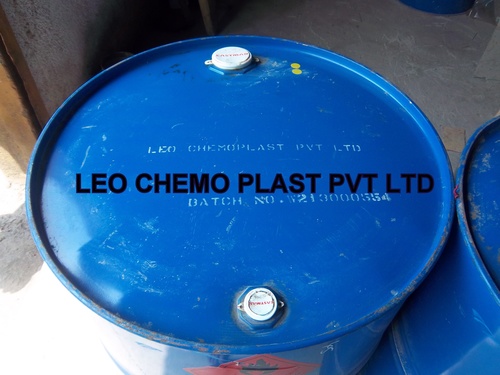
Methyl isobutyl ketone
Usage : Industrial applications, solvent extraction, paint and coating formulations
CAS No : 108101
Appearance : Clear, colorless liquid
Odour : Mild, sweet, acetonelike
Storage Instructions : Store in a cool, wellventilated place away from sources of ignition
Shelf Life : 24 Months
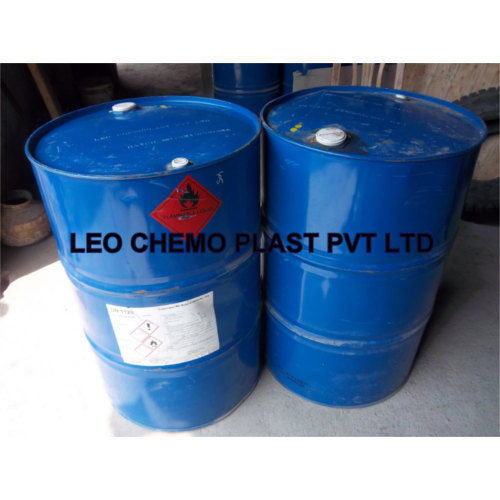
Butyl Glycol Acetate
Usage : Solvent for resins, oils, and waxes; cleaning agent
CAS No : 112072
Appearance : Clear, colorless liquid
Odour : Mild, esterlike odour
Storage Instructions : Store in a tightly closed container in a cool, dry, and wellventilated area, away from heat and sources of ignition
Shelf Life : 12 months in unopened original container
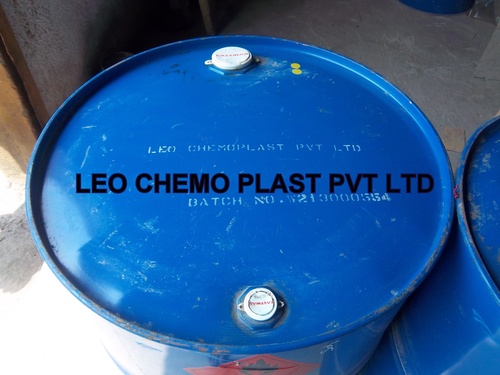
N-butyl-methacrylate
Usage : Intermediate in polymer production
CAS No : 97869
Appearance : Clear liquid
Odour : Characteristic esterlike smell
Storage Instructions : Store in a cool dry place away from direct sunlight
Shelf Life : 1 year

Tertiary-Butylamine
Usage : Used in organic synthesis intermediates for pharmaceuticals
CAS No : 75649
Appearance : Colorless liquid
Odour : Ammonialike
Storage Instructions : Store in a cool dry and wellventilated area away from heat and ignition sources
Shelf Life : 2 years


 Send Inquiry
Our Products

B/126, Ghatkopar Industrial Estate, Behind R-City Mall, Off. L.B.S. Marg, Ghatkopar (W),Mumbai - 400086, Maharashtra, India

Mr. Sudhir Mehta
(JMD)
Mobile :08045800815
Mr. Hitesh Mehta
(CMD)
 Send Inquiry
 Send SMS
Developed and Managed by Infocom Network Private Limited.
