
Call us now :08045800815
 Send Inquiry
 Send Inquiry
Toluene diisocyanate
Toluene diisocyanate Specification
- Appearance
- Clear to pale yellow liquid
- Solubility
- Reacts with water; soluble in organic solvents
- Odour
- Sharp, pungent
- Density
- 1.22 Gram per cubic centimeter(g/cm3)
- Ph Level
- Not applicable (non-aqueous)
- Molecular Weight
- 174.15 g/mol
- Storage Instructions
- Keep in tightly closed containers; store in a cool, dry, well-ventilated area away from moisture and heat
- Chemical Name
- Toluene Diisocyanate
- Other Names
- TDI; 2,4-Toluene diisocyanate; Toluol diisocyanate
- Classification
- Aromatic isocyanate; Organic compound
- CAS No
- 584-84-9
- Type
- Industrial chemical
- Application
- Production of polyurethanes, flexible foams, coatings, adhesives, sealants, and elastomers
- Application Method
- Used as a raw material in reaction with polyols to form polymers
- Raw Material
- Toluene
- Physical State
- Liquid
- Usage
- Industrial use in plastics and rubber industries
- Shelf Life
- 12 Months
- Purity(%)
- 99%
- Drying Time
- Varies depending on application, generally rapid
- Best Before
- 12 Months from manufacturing date
- Refractive Index
- 1.566 at 20°C
- Hazard Statements
- Toxic by inhalation, can cause respiratory and skin sensitization, strong irritant
- Flash Point
- 127°C (closed cup)
- HS Code
- 29291010
- Vapor Pressure
- 0.01 mmHg at 20°C
- Boiling Point
- 251°C
- Melting Point
- ~20°C
- Packaging Details
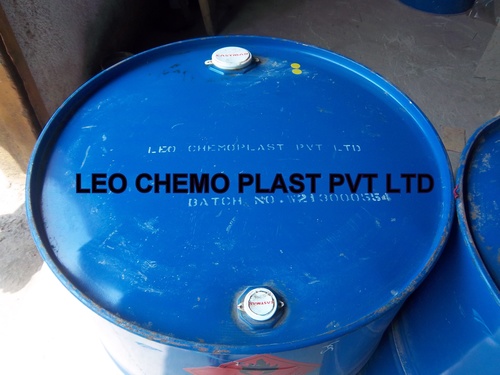
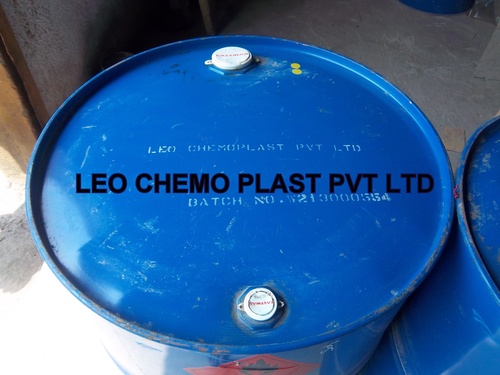
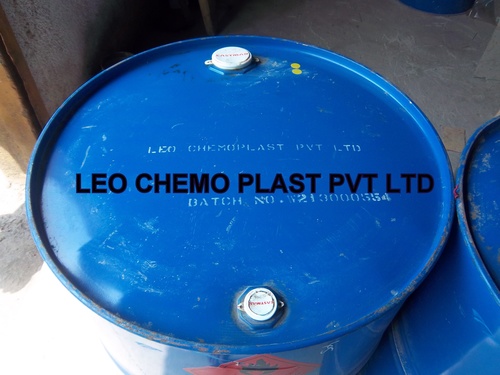
- Available in drums or ISO tanks
- Note
- Handle with proper personal protective equipment; use only in well-ventilated areas; avoid contact with water
- EC Number
- 209-544-5
- Stability
- Stable under recommended storage conditions
- UN Number
- 2078
About Toluene diisocyanate
Toluene diisocyanate (TDI) is an organic compound with the formula CH3C6H3(NCO)2. Two of the six possible isomers are commercially important: 2,4-TDI (CAS: 584-84-9) and 2,6-TDI (CAS: 91-08-7). 2,4-TDI is produced in the pure state, but TDI is often marketed as 80/20 and 65/35 mixtures of the 2,4 and 2,6 isomers respectively. It is produced on a large scale, accounting for 34.1% of the global isocyanate market in 2000, second only to MDI.[3] Approximately 1.4 billion kilograms were produced in 2000.[4] All isomers of TDI are colorless, although commercial samples can appear yellow.
The isocyanate functional groups in TDI react with hydroxyl groups to form carbamate (urethane) links. The two isocyanate groups in TDI react at different rates: The 4-position is approximately four times more reactive than the 2-position. 2,6-TDI is a symmetrical molecule and thus has two isocyanate groups of similar reactivity, similar to the 2-position on 2,4-TDI. However, since both isocyanate groups are attached to the same aromatic ring, reaction of one isocyanate group will cause a change in the reactivity of the second isocyanate group.[3]
It is used in the production of flexible polyurethane foams.
The isocyanate functional groups in TDI react with hydroxyl groups to form carbamate (urethane) links. The two isocyanate groups in TDI react at different rates: The 4-position is approximately four times more reactive than the 2-position. 2,6-TDI is a symmetrical molecule and thus has two isocyanate groups of similar reactivity, similar to the 2-position on 2,4-TDI. However, since both isocyanate groups are attached to the same aromatic ring, reaction of one isocyanate group will cause a change in the reactivity of the second isocyanate group.[3]
It is used in the production of flexible polyurethane foams.
Versatile Applications in Industry
Toluene diisocyanate is a key raw material in the plastics, rubber, and chemical industries. Its primary application involves reacting with polyols to create polyurethanes, used extensively in flexible foams, coatings, adhesives, and elastomers. This versatility supports high-performance product development across a range of sectors, optimizing both functionality and durability.
Safe Handling and Storage Guidelines
Due to its hazardous natureposing risks by inhalation and contactTDI must be handled with suitable personal protective equipment. Storage should be in tightly closed containers, in cool, dry, well-ventilated areas, and away from moisture or heat sources. Following recommended safety protocols ensures both user protection and product stability over its 12-month shelf life.
FAQs of Toluene diisocyanate:
Q: How should Toluene diisocyanate be handled to ensure safety?
A: Toluene diisocyanate must be handled with appropriate personal protective equipment such as gloves, goggles, and protective clothing. Use in well-ventilated areas to prevent inhalation of vapors, and always avoid contact with water, as it reacts strongly. Adhering to recommended safety guidelines minimizes the risk of respiratory and skin sensitization.Q: What are the primary industrial uses of Toluene diisocyanate?
A: TDI is predominantly used in the production of polyurethanes, which are essential for manufacturing flexible foams, coatings, adhesives, sealants, and elastomers. These materials are then utilized in furniture, automotive, construction, and insulation industries due to their durability and flexibility.Q: When is Toluene diisocyanate considered stable for use?
A: TDI remains stable under recommended storage conditionstightly sealed in containers, kept in a cool, dry, well-ventilated location away from heat and moisture. Its chemical stability is maintained throughout its 12-month shelf life when these guidelines are diligently followed.Q: Where is Toluene diisocyanate typically stored and in what packaging formats?
A: Toluene diisocyanate is usually stored in industrial environments that provide temperature and moisture control. It is available in secure packaging, such as drums or ISO tanks, to maintain product integrity during storage and distribution throughout India.Q: What is the process for using Toluene diisocyanate in manufacturing?
A: In industrial applications, TDI is reacted with polyols to synthesize polyurethane polymers. The process involves mixing with other formulation components, under controlled conditions, to initiate polymerization. The resulting materials display rapid curing and are tailored to various end uses.Q: What benefits does Toluene diisocyanate offer to manufacturers?
A: TDI provides manufacturers the advantage of producing high-quality polyurethanes with tailored properties such as flexibility, resilience, and strong adhesive characteristics. Its compatibility with various organic solvents and rapid curing capabilities make it a preferred choice for enhancing productivity and product reliability.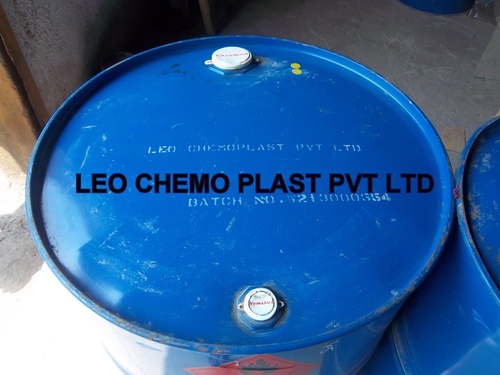
Tell us about your requirement

Price:
Quantity
Select Unit
- 50
- 100
- 200
- 250
- 500
- 1000+
Additional detail
Mobile number
Email

More Products in Organic Solvents Category
Neopentyl glycol
Molecular Weight : 104.15 g/mol
Type : Other , Industrial Chemical / Polyol
Physical State : Other, Crystalline solid
Chemical Name : Neopentyl Glycol
Solubility : Soluble in water and many organic solvents
Usage : Intermediate for resins and plasticizers, component in surface coatings and synthetic lubricants
N-butyl-methacrylate
Molecular Weight : 142.2 g/mol
Type : Other , Monomer
Physical State : Other, Liquid
Chemical Name : Nbutylmethacrylate
Solubility : Slightly soluble in water soluble in organic solvents
Usage : Intermediate in polymer production

Tri-n-Butylamine (TNBA)
Molecular Weight : Not available from the provided image
Type : Other , Not available from the provided image
Physical State : Other, Not available from the provided image
Chemical Name : TrinButylamine (TNBA)
Solubility : Not available from the provided image
Usage : Not available from the provided image
1,4-Butanediol
Molecular Weight : 90.12 g/mol
Type : Chemical, Other
Physical State : Other, Liquid
Chemical Name : 14Butanediol
Solubility : Soluble in water
Usage : Industrial solvent raw material for polymers


 Send Inquiry
Our Products

B/126, Ghatkopar Industrial Estate, Behind R-City Mall, Off. L.B.S. Marg, Ghatkopar (W),Mumbai - 400086, Maharashtra, India

Mr. Sudhir Mehta
(JMD)
Mobile :08045800815
Mr. Hitesh Mehta
(CMD)
 Send Inquiry
 Send SMS
Developed and Managed by Infocom Network Private Limited.
