
Call us now :08045800815
 Send Inquiry
 Send Inquiry
Sodium benzoate
Sodium benzoate Specification
- Density
- 1.44 Gram per cubic centimeter(g/cm3)
- Ph Level
- Around 8 (1% aqueous solution)
- Odour
- Odourless
- Appearance
- White crystalline powder
- Molecular Weight
- 144.11 g/mol
- Storage Instructions
- Store in a cool, dry place, away from moisture and direct sunlight
- Solubility
- Soluble in Water
- Chemical Name
- Sodium Benzoate
- Other Names
- Benzoate of Soda
- Classification
- Preservative
- CAS No
- 532-32-1
- Type
- Food Grade
- Application
- Food & Beverage, Pharmaceuticals, Cosmetics
- Application Method
- Direct Addition
- Raw Material
- Benzoic Acid and Sodium Hydroxide
- Physical State
- Powder/Granular
- Usage
- Used as a preservative to extend shelf life and inhibit microbial growth
- Shelf Life
- 2 Years
- Purity(%)
- 99%
- Best Before
- 24 Months from date of manufacture
- Toxicity
- Low if used within recommended limits
- Moisture Content
- 0.5% Max
- Lead Content
- Less than 2 ppm
- Packing Type
- Bag or Drum
- Incompatibility
- Strong oxidizing agents
- Boiling Point
- Not applicable (decomposes before boiling)
- E Number
- E211
- Transport Information
- Non-hazardous
- Stability
- Stable under recommended storage conditions
- Assay
- 99.0%
- Bulk Density
- 0.75-0.95 g/cm3
- Melting Point
- 300 C (Decomposes)
About Sodium benzoate
Sodium benzoate is a substance which has the chemical formula NaC7H5O2. It is a widely used food preservative, with an E number of E211. It is the sodium salt of benzoic acid and exists in this form when dissolved in water. It can be produced by reacting sodium hydroxide with benzoic acid.
Preservative
Sodium benzoate is a preservative, with the E number E211. It is most widely used in acidic foods such as salad dressings (i.e. acetic acid in vinegar), carbonated drinks (carbonic acid), jams and fruit juices (citric acid), pickles (acetic acid), condiments and frogurt toppings. It is also used as a preservative in medicines and cosmetics.[5][6] Under these conditions it is converted into benzoic acid (E210), which is bacteriostatic and fungistatic. Benzoic acid is generally not used directly due to its poor water solubility. Concentration as a food preservative is limited by the FDA in the U.S. to 0.1% by weight.Sodium benzoate is also allowed as an animal food additive at up to 0.1%, according to AFCO's official publication. Sodium benzoate has been replaced by potassium sorbate in the majority of soft drinks in the United Kingdom.
Sodium benzoate is used as a treatment for urea cycle disorders due to its ability to bind amino acids.This leads to excretion of these amino acids and a decrease in ammonia levels. Recent research shows that sodium benzoate may be beneficial as an add-on therapy (1 gram/day) in schizophrenia.Total Positive and Negative Syndrome Scale scores dropped by 21% compared to placebo.
Sodium benzoate, along with phenylbutyrate, is used to treat hyperammonemia.
Sodium benzoate is also used in fireworks as a fuel in whistle mix, a powder that emits a whistling noise when compressed into a tube and ignited.
Powerful Preservative for Multiple Industries
Sodium benzoate is recognized globally as a reliable preservative, essential for maintaining product quality in the food, beverage, pharmaceutical, and cosmetic sectors. Its effectiveness at inhibiting the growth of bacteria, yeast, and mold makes it a popular choice for manufacturers looking to extend product shelf life while ensuring consumer safety. The substance is easy to handle, non-hazardous for transport, and complies with international standards.
Consistent Quality and Easy Application
With an assay of at least 99% purity and minimal lead content, sodium benzoate meets stringent quality requirements. The product is supplied in the form of a free-flowing white crystalline powder or granules, ensuring ease of handling during direct addition processes. Its high solubility in water allows for thorough mixing and uniform preservation in a wide variety of applications, guaranteeing effectiveness across food, beverage, and personal care products.
FAQs of Sodium benzoate:
Q: How is sodium benzoate typically used in food and beverage products?
A: Sodium benzoate is added directly to food and beverage products as a preservative. Its primary role is to inhibit the growth of bacteria, yeast, and mold, thus extending the shelf life of the items it is added to. It is most effective in acidic environments and is widely used in soft drinks, fruit juices, pickles, and condiments.Q: What are the main benefits of using sodium benzoate as a preservative?
A: Sodium benzoate offers effective microbial inhibition, prolonging the shelf life and freshness of products. It maintains product safety by preventing spoilage, with low toxicity when used within recommended limits. Additionally, it is versatile, stable, easy to handle, and highly soluble in water for even distribution in formulations.Q: When should sodium benzoate be added during the manufacturing process?
A: Sodium benzoate is generally added during the formulation or blending stage, before packaging. Due to its high solubility, it disperses uniformly when mixed with liquid or powder mixtures, ensuring effective preservation throughout the product.Q: Where should sodium benzoate be stored for optimal stability?
A: For maximum stability, sodium benzoate should be stored in a cool, dry place, away from moisture and direct sunlight. Following these storage guidelines helps maintain its efficacy over its two-year shelf life and prevents premature decomposition or clumping.Q: What precautions need to be considered regarding sodium benzoates incompatibility and handling?
A: Sodium benzoate should not be mixed with strong oxidizing agents, as this can cause unwanted chemical reactions. While the product is non-hazardous for transport, standard precautions such as wearing gloves and avoiding inhalation of dust are advisable during handling.Q: How does sodium benzoate benefit pharmaceutical and cosmetic applications?
A: In pharmaceuticals and cosmetics, sodium benzoate acts as a preservative to inhibit microbial growth, ensuring product safety and longevity. Its broad-spectrum activity and low odor make it suitable for formulations such as syrups, ointments, creams, and lotions, where preservation without impacting scent or texture is essential.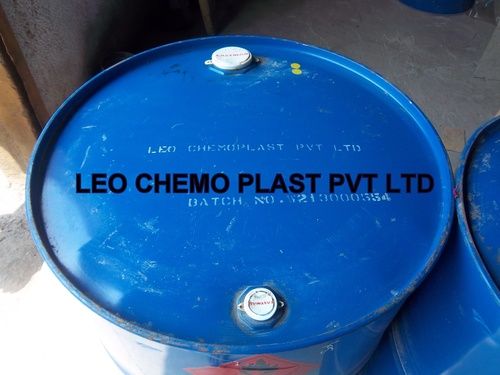
Tell us about your requirement

Price:
Quantity
Select Unit
- 50
- 100
- 200
- 250
- 500
- 1000+
Additional detail
Mobile number
Email

More Products in Organic Solvents Category
Hydroquinone
Usage : Laboratory, Industrial, Cosmetic Applications
Application : Photography Developer, Polymerization Inhibitor, Skin Depigmentation, Cosmetics
Chemical Name : Hydroquinone
Solubility : Soluble in Water, Alcohol, Ether; Slightly Soluble in Benzene
Application Method : Other, Direct Use as Reagent or Additive
Best Before : 36 Months from Manufacturing Date
MP Diol Glycol
Usage : Used in coatings, inks, resins, cleaners, metalworking, personal care
Application : Solvent, intermediate, emulsifier, coupling agent
Chemical Name : 2Methyl2,4pentanediol
Solubility : Miscible with water and common organic solvents
Application Method : Other, Direct addition to formulations
Best Before : Use within shelf life period
Naphthalene Crude
Usage : Used in production of phthalic anhydride, insecticides, and dye intermediates
Application : Chemical Intermediate, Dye Manufacturing, Synthetic Resin Production
Chemical Name : Naphthalene Crude
Solubility : Slightly soluble in water; readily soluble in organic solvents
Application Method : Other, Industrial Processing
Best Before : Use within shelf life period
Diethylenetriamine
Usage : Intermediate chemical in organic synthesis epoxy curing agent and corrosion inhibitor production
Application : Used as an intermediate in producing epoxy curing agents organic chemicals fuel additives and corrosion inhibitors.
Chemical Name : Diethylenetriamine
Solubility : Soluble in water
Application Method : Industrial application, Other
Best Before : 2 years from manufacture date


 Send Inquiry
Our Products

B/126, Ghatkopar Industrial Estate, Behind R-City Mall, Off. L.B.S. Marg, Ghatkopar (W),Mumbai - 400086, Maharashtra, India

Mr. Sudhir Mehta
(JMD)
Mobile :08045800815
Mr. Hitesh Mehta
(CMD)
 Send Inquiry
 Send SMS
Developed and Managed by Infocom Network Private Limited.
